The Phone Is The Stadium: How MPFL Found 3.7 Million Views Without A Broadcaster
MPFL's viewers watch social clips and a YouTube stream. They do not watch television, because there is none. This is a clip culture, and on 5 September it was worth 3,724,653 views on one fixture.
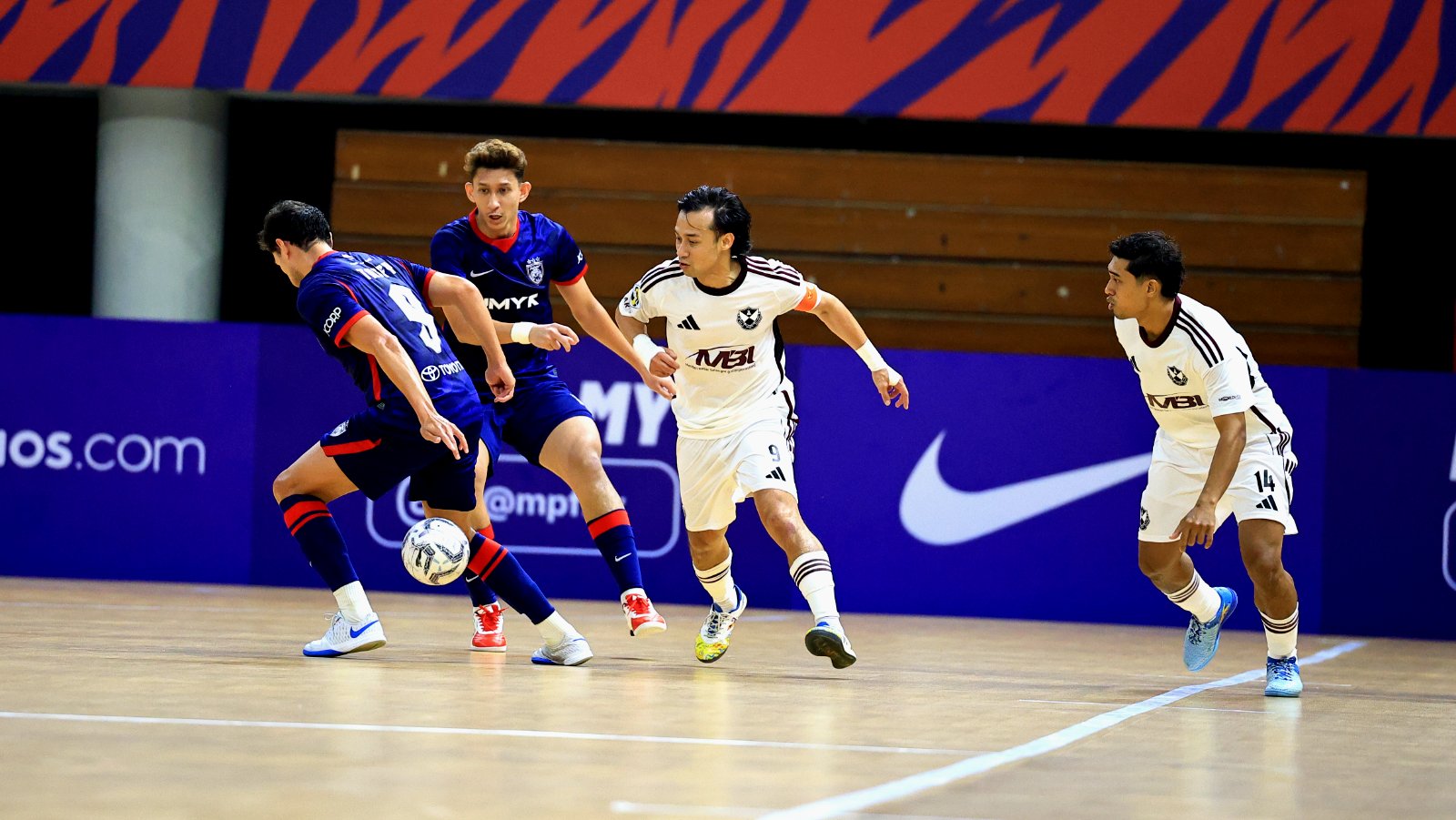
Nobody in Malaysia turned on a television to watch Johor Darul Ta'zim play Selangor FC on the evening of Saturday 5 September. There was no channel to turn to. The Malaysia Premier Futsal League operates without a broadcaster. The first matchday of Circuit 8 went out live on the League's own YouTube channel, one of the six that make up the MPFL Network, and nowhere else. By the end of the week, coverage of that single fixture had been watched 3,724,653 times.
That is what a Malaysian futsal audience now looks like: a live stream and a run of clips, watched on a phone, with no television anywhere in it. The number deserves a moment, but not for the reason it first suggests. It is not a claim about how many people were watching. Views are counted every time a piece of content is shown, and one person watching six clips of the same match produces six of them. What the figure describes is not a crowd. It is a behaviour, and the shape of it says a good deal about how Malaysians now follow their sport.
**The night was won in two hours.** The MPFL Network published 138 pieces about the fixture between 6.16pm and 11.16pm. Ten of them went out before the 8.30pm kick-off, covering ticketing, team sheets, the arrival and the warm-up, and between them they took just over two per cent of the views on the two channels that timestamp every post. The 22 pieces published between kick-off and full time took 92.6 per cent. The audience was not waiting for a highlights package. It was watching the match unfold in its hand, one clip at a time, while the game was still going on.
That is a different act from sitting down in front of a television at eight o'clock. It is closer to being in the arena and turning to the person beside you. The clips arrived in group chats before the restart. The scoreline moved and the phone knew about it.
**This is a clip culture, and futsal is built for it.** The clip is not a lesser version of the match for people who missed it. It is the unit the audience actually consumes, and the match is the source material it is cut from. Futsal suits that better than almost any sport Malaysia plays. The court is small and lit the same way for the whole match, so a fixed camera holds a usable frame all night. The ball does not go out of play for long. Johor and Selangor produced nine goals in forty minutes of play, and every one of them, along with the saves and the near-misses in between, crops to a vertical rectangle without losing anything that matters. A sport that once had to be squeezed into a broadcast hour is now cut into pieces that travel on their own.
**The most-watched moment of the night was not a goal.** At 8.49pm, with the game still goalless, Johor came within a boot's length of opening the scoring and did not. The Network posted it under one word, TERSELAMAT, and across Facebook, TikTok and Threads that near-miss was watched 443,179 times. Selangor's third goal, at 9.14pm, took 413,277. Their fourth, twelve minutes later, took 355,384. The gasp travelled further than the finish.
There is something recognisably Malaysian in that. The audience here is not a loud one. It comments sparingly and shares constantly, and a moment that makes a room draw breath is a moment worth sending to somebody. The full-time graphic, a still image carrying nothing but the crests and a 3-6 scoreline, was watched 300,010 times across four channels, 218,019 of them on Instagram alone. Not the goals. The result, as an object, passed hand to hand.
**This is the third home Malaysian futsal has had in four years.** In 2023 and 2024 the league game reached its audience through Astro Arena, drawing 4.1 million and then 8.8 million cumulative television viewers. In 2025 it scattered across other people's YouTube channels, Jen TV, Zi and Friends, Dos Sportivo and the clubs themselves, and gathered 0.86 million views in total. Since 15 May 2026, on the six channels of the MPFL Network, which the League owns outright, it has passed 63 million views in 112 days.
Those numbers are not the same unit and cannot be added together or set against one another as a like-for-like score. A cumulative television viewer and a video view are different measurements of different things. What they do show, unambiguously, is direction. Each era reached its audience in a different place, and the audience kept moving before the sport did. The MPFL viewer of 2026 watches clips and a live stream. Where a broadcaster once stood between the game and the person watching it, there is now a network the League reports through itself.
**The move is not a retreat from a small sport.** Futsal is the second most-played sport in Malaysia, at 11.0 per cent participation against football's 11.6 per cent and badminton's 8.5 per cent, on the Malaysian Sports Culture Index of 7,015 respondents aged 13 and over. The people were always there. For most of the last decade the question was whether a schedule slot existed to reach them. That question has stopped being asked.
**One night is not a season, and the League should be the first to say so.** Circuit 8 ran eight full-match live streams across three days. Johor against Selangor took 92,760 views on YouTube. The median of the other seven took 7,511. First against second, in Johor, on a Saturday night, is a different proposition from a Sunday morning tie between mid-table sides, and it always was. Television knew that too. What has changed is that the fixture now sets its own ceiling, rather than a scheduler setting it in advance.
There is a quieter finding underneath all of it. The audience arriving on the Network is older than the League assumed when it started, with 70.5 per cent of it between 25 and 44. This is not a teenage phenomenon on a phone. It is working adults, watching a domestic league at half past eight on a Saturday, on the screen that happens to be nearest.
Sixteen thousand four hundred and eight hours of the fixture were watched on YouTube alone, most of them on the full 133-minute stream. Set against the scroll, that is the more interesting figure: given the choice, a substantial audience sat down and watched all of it. The play-offs begin on 19 September, with the finals on 24 and 31 October. Nobody will need to check a listings page, because there is no listing to check. The audience already knows where to find it.