Set Plays, Pressed Defences and the 1-2-1 Formation: A Beginner's Guide to Reading a Futsal Match
It may look complicated but if you break it down futsal tactics do make sense

Futsal can look chaotic to the uninitiated. Played on a court a fraction the size of a football pitch, with five players a side and a heavier, low-bounce ball, the game moves at a pace that can obscure the structure underneath it. Look closer, though, and most matches are built around a handful of recurring patterns that, once spotted, make the sport far easier to follow.
The most common starting shape is the 1-2-1, sometimes called a diamond. It places a lone defender in front of the goalkeeper, two wide players either side of the middle of the court, and a pivot, an out-and-out forward, playing with their back to goal near the opposition's line. The shape is popular because it offers balance in both directions. In possession, the pivot occupies the last defender, the wingers stretch the court from touchline to touchline, and the deep defender dictates tempo from the back, often acting as the side's primary passer. Out of possession, the same four outfield players can compress into a narrow box, cutting off the central passing lanes that a smaller pitch makes so valuable.
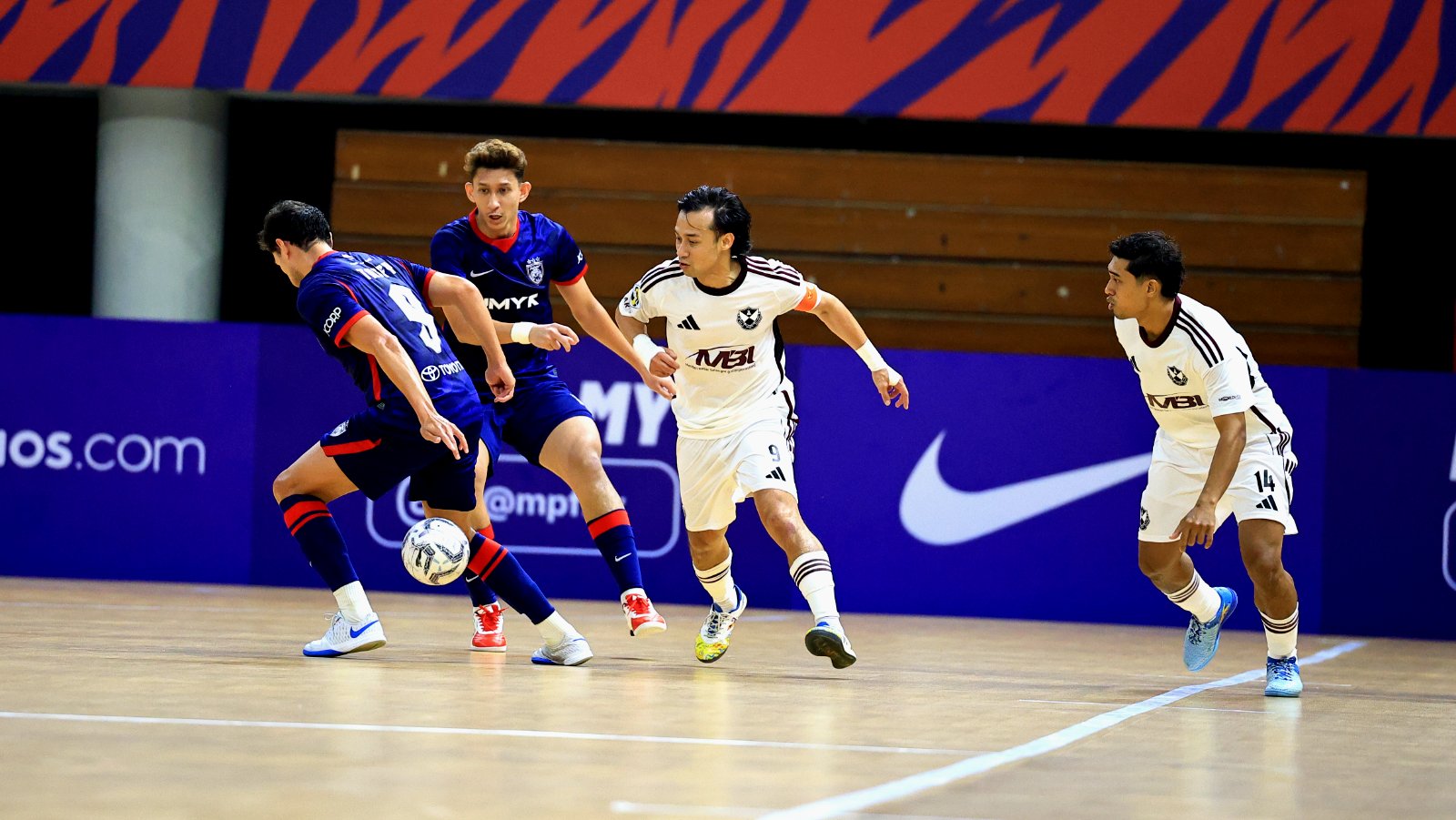
Pressing is where futsal's compact dimensions really bite. Because there is so little space to hide, teams that press well can force turnovers high up the court with startling regularity, and a mistimed pass in a team's own half is far more costly than in football. Watch for a team stepping up together as soon as the opposition goalkeeper receives the ball, using the four-second rule to their advantage, or a winger showing an opponent inside only for a team-mate to intercept the pass. When a press is well organised, it can turn defence into attack in a single touch.
Kick-ins, the futsal equivalent of a throw-in, are taken with the feet rather than the hands and must be released within four seconds, making quick, rehearsed routines valuable. Corners and free kicks inside the penalty area are frequently worked short rather than played long, since aerial crosses carry little value on a court with no meaningful height advantage to exploit. Watch for a pivot dropping short to create a passing angle, or a winger peeling off the back post for a low, driven finish rather than a header.
None of this requires expert knowledge to spot. A newcomer watching for the basic diamond shape, the moment a press is triggered, and how a team restarts play from a kick-in or free kick will already be reading the game in the way coaches and analysts do. Futsal rewards close attention to space and timing far more than raw athleticism, and once those patterns become visible, the sport's apparent chaos starts to look a good deal more like control.